e a m harris

Poetry in dark archives

Browsing through the British Library website, as I do from time to time, I came across an entry entitled A Page but not as We Know It and in it was the following wonderful phrase:

Analytical Access to the Domain Dark Archive

To me it sounded like a cross between the title of a fantasy novel and a line of Anglo-Saxon alliterative poetry. It also seems mysterious and enticing – I’d never heard of dark archives and I imagined  librarians creeping between long shelves of ancient books lit only by a guttering candles (too much Harry Potter here, perhaps).

Actually dark archives are, according to Webopedia, data stores not generally accessible. Access is either restricted to a few people or completely denied. Their main purpose is to act as a back up during disaster recovery. A sensible precaution for any organisation. The Analytical Access is a project of the British Library and several other academic organisations.

This common sense description doesn’t reduce their mysteries. I’d love to know how many there are, what’s in them, who has access to them, who created them.

I bet the CIA has a huge one. Ditto other security services. Then there are the digitisation programmes of major libraries. And don’t companies have them?

What will become of them in the long term if only a few people can care for them? Will they float forever in the electronic ether, lit only occasionally by the computer of a visiting historian? Or will they fade slowly into nothing? If their creators die without telling anyone the passwords, will armies of hackers have to work them out?

Or will they just be deleted?

Daily haiku – morning glory

As always Carpe Diem has interesting things to say and lovely haiku – this time on a very Japanese subject.

Here is my effort:

today’s sun rises

in all its morning glory;

sky flushed blushing pink

To see what others have done with this subject, follow the link above to the Carpe Diem blog.

30 Day Book Challenge – day 15: Favourite book about foreign culture

I recently did a post about William Dalrymple’s Nine Lives: In Search of the Sacred in Modern India, and that is definitely my current fave. The lives described are very different from my own, but beneath their exotic surfaces lie common human desires and fears: the desire for love, the search for spiritual enlightenment, the need for respect, the fear of rejection etc.

I’ve read a great many books, both fiction and non-fiction set in foreign cultures. I read them for entertainment and to learn – to see how others live and think. But I keep coming back to how alike we all are in our deepest being.

Foreign is not only found in another country. The people in a historical novel like Hilary Mantel’s Wolf Hall are a lot more different to me than anyone in the modern world.

‘Foreign culture’ need not be elsewhere or elsewhen. The website of The University of Texas at Austin, under Foreign Culture Categories, states that students can satisfy their foreign culture study requirement by taking courses in American Sign Category, where they will learn about Perspectives on Deafness among other things related to culture and disability. I suspect that not only will they study differences, but will also discover likenesses.

goodreads

For pages of books set in foreign culture try goodreads

Suffragettes and Suffragists

With the Suffragettes being in the limelight at present (this year marks the centenary of the death of Emily Davison), I’ve looked around for poetry about them.

The first ones I found seemed to be modern takes on something the authors knew little about – see Kidpub which describes the poem they quote as ‘weird’ or Wattpad which at least has some history and knows the difference between Suffragettes and Suffragists.

The Wordsmith’s Forge is more serious with her poem Say Something for the Suffragettes, which lists the main players in the campaign:

If you’re a woman and you vote,
these are the ones who gave you a voice –

And Teen Ink has an interesting one, Suffragette, about force feeding:

But the force feeding law makes me feel sick with fear,
Just then I hear footsteps – oh my God! They’re here!

I found a few others on the web, but not many.

This has made me wonder if other great political movements do or do not inspire poetry. I shall have to investigate.

Nine Lives: In Search of the Sacred in Modern India by William Dalrymple

nine lives coverIndia has numerous paths to spiritual goals, and in this book the author encounters nine of them. He is known as a travel writer so anyone seeking a deep analysis of the history and theology of these paths will be somewhat disappointed. But only somewhat: Mr Dalrymple’s research has been considerable and he fills in the history and theology where relevant.

The travel part of the book is taken care of by the variety of settings and the vivid descriptions the author provides. It’s easy to understand why so many of his previous books have won prizes.

He keeps himself and his opinions in the background and lets the people he interviews speak in their own words (in translation actually as they spoke eight different languages). So what we get is partly nine autobiographies, which are not only about religion but also give an insight into the society of modern India.

Most of the speakers are from rural areas and several of them are from lower castes or are marginalised for other reasons. Their religious lives give them position and respect that might be denied to them otherwise. As the Singer of Epics said:

We Nayaks are from a very low caste … . Still to this day we cannot eat or drink in the house of many of the people in this village. But when we recite or perform as bhopas, this brings us respect.

The Dancer of Kannur saw his chosen path as a means of social change:

… The brighter of the theyyam artists have used theyyam to inspire confidence in the rest of our community. Our people see the upper castes and the Nambooderis bowing down to the deities that have entered us. That self confidence has encouraged the next generation …

The women not only find respect but also protection and emotional fulfilment. The tantric practitioner, The Lady Twilight, put it clearly:

… The greatest pleasure we have is here, with her [Ma Tara]. It is here in this place of death, amid the skulls and bones and funeral pyres, that we have found love.

The other women too, the Jain nun, the temple prostitute and the Sufi mystic, all speak of love in many forms, but mainly for and from the divinities they worship.

There is also a good deal of sadness; some have lost their families, as one of the Baul singers had, and others their homeland, like the refugee monk whose life left him with no peace of mind. Even one of the most successful, the Maker of Idols, looks like being the last of a 700 year family tradition – his only son wants to be a computer engineer.

Apart from the occasional mention of computers, CDs, and various vehicles, there isn’t much of urban, big business India in this book. It lurks in the background, sometimes eating into a tradition or a belief, but on the whole these people seem to keep their sacred traditions and ideologies alive and very active.

Cover from Wikipedia.

30 Day Book Challenge – day 14: A book that should be on school and college reading lists

For this day I’ve chosen The Life of Pi by Yann Martel. There are several reasons:

  • the prose of much of the book is worth reading just for itself
  • by being so imaginative it stretches the imagination – IMHO this is particularly important for young people
  • the writing about animals encourages a reassessment of our relationship with them
  • it raises and explores issues about things like survival, reality, the importance of religion
  • the ambiguity of the end allows the reader space to come to their own conclusions about what it all means

life of pi cover artOne of the main things I took away from my reading was the importance of what we name our fellow creatures. The tiger, Richard Parker, has a human name and I found I had a completely different view of him than if he’d been called an animal-style name like Stripey or Felix. Of course, this has been known for a long time, but it hadn’t been a point I’d ever given much thought to.

If you haven’t read this book, I recommend it. If you haven’t seen the film I recommend that too – it’s beautiful, colourful and gripping.

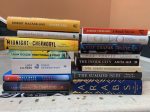
You can’t stop a booklover

You can’t stop a booklover.


This is such a fantastic picture. My thanks to Travel Between the Pages for posting it.

The poetry of bank hols

Today is a bank (i.e. national) holiday in the UK. It’s called Spring Bank holiday but celebrates nothing in particular. The weather has been great all weekend so many people have gone away to the country or seaside.

pic of John LubbockHaving taken time off or extra pay at bank holidays the whole of my working life, I decided it was time I knew a bit more about them. As usual Wikipedia had an article. The Bank of England has given itself days off since forever, but the official creation of modern bank hols was in 1871 when a Liberal MP, Sir John Lubbock, introduced the Bank Holidays Act. So popular was this Act that some people referred to the days as St Lubbock’s days.

There are quite a few poems about bank holidays.

One by Clare Foges is called Bank Holiday and begins:

We were the only ones on the pier
under a heavy sky, grey like something coming.

which most Britons will recognise as fairly typical of bank holiday weather.

Another by Val Warner looks at the End of Another Bank Holiday with a more positive take:

Arterial roads yield the mobile mass
End of a perfect day, whose chariot
Running in fast cars tail each other home.

Both these poems are quite long and it’s well worth reading the whole of them. There are many others worth looking for and reading.

Picture from Mark Patton Reflections of a first-time biographer, where there are details of the biography of Sir John.

A milestone for me

Yesterday I reached a main point in my writing career – I signed and sent back a licencing agreement for a short story.

you me etc cover art

Coming soon

This may not sound like much, but, although several of my poems and stories have been published (see the Top People links on my side-bar for those wonderful magazines that have websites), I’ve never had an actual agreement before.

The story will appear in an anthology You, Me & a Bit of We: A celebration of writing in the first and second person from Chuffed Buff Books. It’ll be available in paperback and ebook.

It’s an interesting concept. I’ve never read any stories in a ‘we’ voice and rarely in ‘you’; I’m looking forward to discovering what the other contributors make of them.

Already published

Already published

Chuffed Buff have other anthologies out, including one of women’s poetry, Journey to Crone.

This will, IMO, resonate with many women’s experience. It looks at the traditional life passage from maiden to mother to crone.

Crone is not the negative life-stage many associate with the word. It’s the stage of wisdom, knowledge and clear-sightedness. The idea is commonly found in the pagan faith community, but also in others that emphasise respect for elders.

Other writers may find Chuffed Buff calls for submissions of interest. One is for a poetry anthology, Poetry & The City, and one for science fiction novellas/novellettes.

Anthologies devoted to a theme often bring about a rethink and reassessment of their subject. It’s like putting a concept under a magnifying glass and peering at its detail.

30 Day Book Challenge – day 13: A favourite childhood book (maybe)

imagesDoing this challenge, I’ve written about several childhood books already. So many of the questions are about things from the past. Unavoidable I suppose, how can something be my ‘fave’ or ‘most hated’ or ‘too emotional’ if I haven’t read it in the past.

Looking at the list of items to come though, I can see there are a couple of questions that look to the future or the what-if. The future and the what-if are places the mind can really run riot and create whole libraries of loved stories without the effort or cost of writing or buying them. I look forward to those challenges when they come round.

But rather than go on with the past right now, I thought I’d change today’s questions a little and look at some ‘might have beens …’ – some of the books that might have been childhood favourites if I’d read them as a child or at all.

I start with the Narnia books. I read the first one as a young adult and quite liked it, but having seen two great films made out of them, I think I should have persisted and really got into the Narnia world.

Philip Pullman’s His Dark Materials series, would definitely be among my childhood favourites if it had been published when I was a child and if I’d read it. I could say the same of Harry Potter.

E. E. Nesbit is an author quite a number of my friends praise and say they loved. Far too late for any of any of her books to become childhood faves of mine and I doubt if I’ll ever read them. Swallows and Amazons by Arthur Ransome is another series I missed out on.

None of these are individual books and most are in series. Is this because people remember them better having read several? or is it because something only becomes a favourite if one can immerse oneself in its world at intervals?

Picture from Harper Collins.

Post Navigation

Follow

Get every new post delivered to your Inbox.

Join 233 other followers

%d bloggers like this: